Clinic Location
Care n Cure Clinic, Nayapalli, Near Hotel Crown, Bhubaneswar
For Consultation
+91 7008110200
+91 9090910009
Work Hours
Mon - Fri : 05:30 - 07:30

- Home
- About Doctor
- Services
Postnatal care
Gynaecological services
- General Consultatnt
- Adolescent Clinic
- Well Women Clicnic
- Gynaecological Surgeries
- Gallery
- Your Pregnancy
- Training
- Contact
- Feedback
- Blog
- Home
- About Doctor
- Services
Postnatal care
Gynaecological services
- General Consultatnt
- Adolescent Clinic
- Well Women Clicnic
- Gynaecological Surgeries
- Gallery
- Your Pregnancy
- Training
- Contact
- Feedback
- Blog

- Home
- About Doctor
- Services
Postnatal care
Gynaecological services
- General Consultatnt
- Adolescent Clinic
- Well Women Clicnic
- Gynaecological Surgeries
- Gallery
- Your Pregnancy
- Training
- Contact
- Feedback
- Blog
Breastfeeding After a C-Section: Common Challenges and Practical Solutions
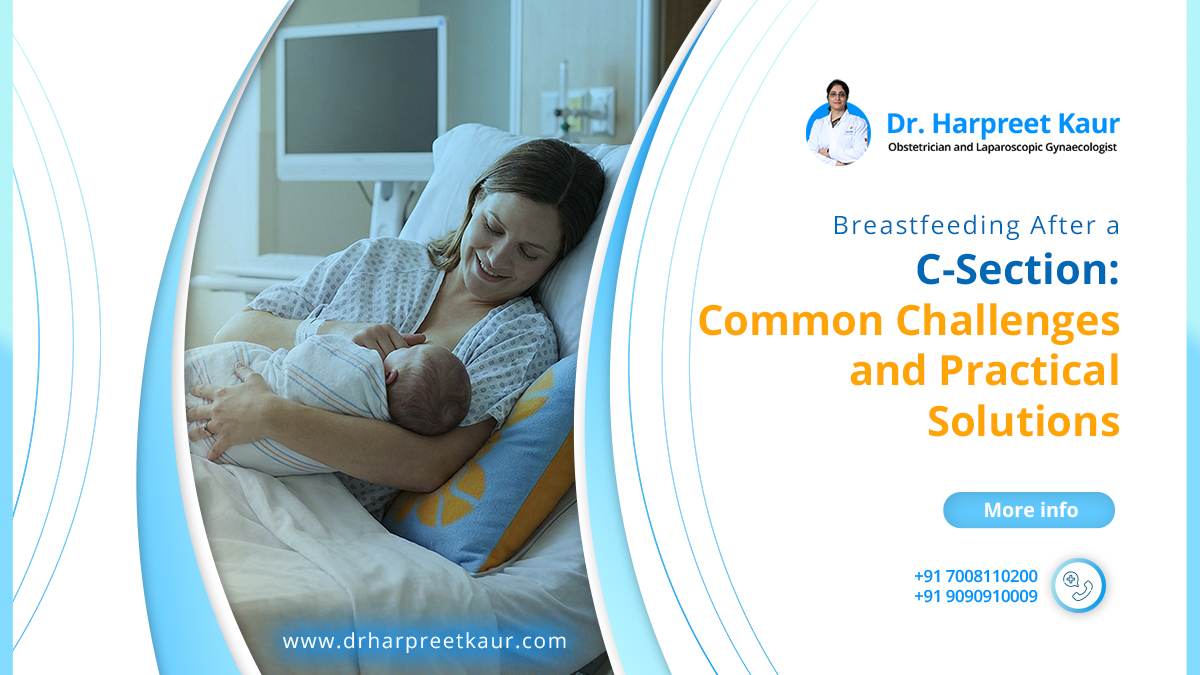
Bringing a baby into the world through a cesarean section is a major surgical experience—physically, emotionally, and hormonally. While many mothers successfully breastfeed after a C-section, the journey can feel more challenging compared to a vaginal delivery. Pain, delayed milk production, limited mobility, and emotional stress often make new mothers question whether breastfeeding after a C-section is truly possible.
The reassuring truth is: breastfeeding after cesarean delivery is absolutely achievable with the right support, positioning, and patience. Understanding common challenges and learning practical solutions can make a significant difference in your breastfeeding experience and recovery.
Understanding Breastfeeding After a C-Section
Breastfeeding after a C-section may begin a little differently, but it is no less beneficial for the baby or mother. Colostrum—the nutrient-rich first milk—can still be produced, and milk supply can be well-established with consistent stimulation and early support.
However, factors such as anesthesia, surgical pain, separation from the baby, and delayed skin-to-skin contact after a C-section may temporarily affect the initiation of breastfeeding. These challenges are common and manageable with the right guidance.
Common C-Section Breastfeeding Challenges
1. Delayed Milk Supply After C-Section
One of the most frequently reported concerns is delayed milk supply after a C-section. Surgical stress, blood loss, IV fluids, and hormonal changes can delay the transition from colostrum to mature milk by a day or two.
This delay does not mean milk will not come in—it simply means the body needs more time and stimulation.
2. Pain While Breastfeeding After Surgery
Incision pain and abdominal tenderness can make holding the baby uncomfortable. Many mothers experience pain while breastfeeding after surgery, especially in traditional positions that place pressure on the surgical site.
Pain can interfere with relaxation, which is essential for milk let-down.
3. Limited Mobility and Fatigue
Post-surgical recovery can restrict movement, making it harder to position the baby independently. Fatigue, combined with nighttime feeds, can feel overwhelming during the first few days.
4. Difficulty with Latch
Babies born via cesarean delivery may be slightly sleepier due to anesthesia exposure, which can affect early feeding cues and latch quality.
Practical Solutions for Successful Breastfeeding After a C-Section
Prioritize Early and Frequent Skin-to-Skin Contact
Skin-to-skin contact after a C-section plays a crucial role in breastfeeding success. As soon as medically possible, placing the baby on the mother’s chest helps regulate the baby’s temperature, stabilizes blood sugar, and stimulates milk-producing hormones.
Even brief skin-to-skin sessions multiple times a day can significantly improve milk supply and bonding.
Focus on Whole, Nutrient-Dense Foods
Selecting the right breastfeeding positions after a C-section can reduce pain and protect the incision site. Some of the most effective positions include:
- Football (clutch) hold: Keeps the baby away from the abdomen and incision
- Side-lying position: Ideal for rest and night feeds
- Laid-back or reclined position: Uses gravity to support the baby without pressure
Using pillows or a breastfeeding cushion can provide additional support and comfort.
Manage Pain Effectively
Adequate pain control is essential for breastfeeding recovery after a C-section. Safe, doctor-prescribed pain relief allows the mother to sit comfortably, relax, and feed more effectively.
Contrary to common fears, most post-cesarean pain medications are compatible with breastfeeding. Always consult your obstetrician before discontinuing medication.
Stimulate Milk Production Early
To address low milk supply after a C-section, early and frequent breast stimulation is key. Feeding the baby every 2–3 hours or using a breast pump if direct feeding is difficult helps signal the body to increase milk production.
Even if only colostrum is present initially, consistent stimulation supports long-term supply.
Seek Support Without Guilt
Learning how to breastfeed after cesarean is not something mothers should do alone. Lactation consultants, nurses, and obstetric care providers can offer hands-on guidance with latch, positioning, and pumping strategies.
Accepting help—whether from healthcare professionals or family members—allows the mother to focus on healing and feeding.
Emotional Recovery and Breastfeeding Confidence
Breastfeeding after a C-section is not just a physical process; it is deeply emotional. Some mothers feel disappointment if breastfeeding does not begin as smoothly as expected. It is important to remember that a cesarean birth does not define breastfeeding success or maternal ability.
With patience, reassurance, and realistic expectations, most mothers go on to establish a healthy and fulfilling breastfeeding relationship.
Breastfeeding Recovery After a C-Section: What to Expect
Recovery is gradual. As pain decreases and mobility improves, breastfeeding becomes easier and more intuitive. Milk supply typically stabilizes within the first two weeks when feeds are consistent and effective.
Every mother’s journey is unique, and comparison should be avoided. Progress—no matter how small—is meaningful.
A Gentle Word from Dr Harpreet Kaur
According to Dr Harpreet Kaur, breastfeeding after a C-section requires compassion—for the body and the mind. With proper medical support, correct positioning, and emotional reassurance, mothers can overcome early challenges and experience the full benefits of breastfeeding.
Final Thoughts
Breastfeeding after a C-section may come with challenges, but it is both possible and rewarding. Understanding common c-section breastfeeding challenges, prioritizing comfort, encouraging skin-to-skin contact, and seeking timely support can transform the experience.
Your body has already done something extraordinary. With patience and care, it can nourish your baby beautifully too.